Best Siding Materials for Ottawa Homes: Vinyl vs Aluminum vs Fiber Cement vs Wood (2026 Cold Climate Guide)
The complete 2026 comparison of siding materials for Ottawa's harsh climate. Compare vinyl, aluminum, fiber cement, engineered wood, and cedar siding by cost, durability, energy efficiency, and lifespan to choose the right material for your home.
Why Siding Material Choice Matters in Ottawa
Choosing the right siding material is one of the most consequential exterior decisions an Ottawa homeowner will ever make. Unlike many home improvement choices that can be reversed easily, siding installation typically lasts 20-50 years, costs $15,000-$50,000+ for an average detached home, and directly impacts your home's energy efficiency, curb appeal, resale value, and maintenance burden for decades to come.
In Ottawa's climate — characterized by extreme temperature swings from -35C windchills to +35C humid summers, freeze-thaw cycles that batter materials weekly, ice storms, hail, heavy snow, and intense UV exposure — material choice is even more critical than in milder Canadian cities. Materials that perform beautifully in Vancouver or Halifax may fail prematurely in Ottawa. That's why working with trusted Ottawa siding company professionals who understand local performance data is essential to getting a long-lasting result.
5
Major Siding Materials Compared
20-50
Years Lifespan Range
$8-$25
Per Sq Ft Installed Range
76%
Avg ROI on New Siding
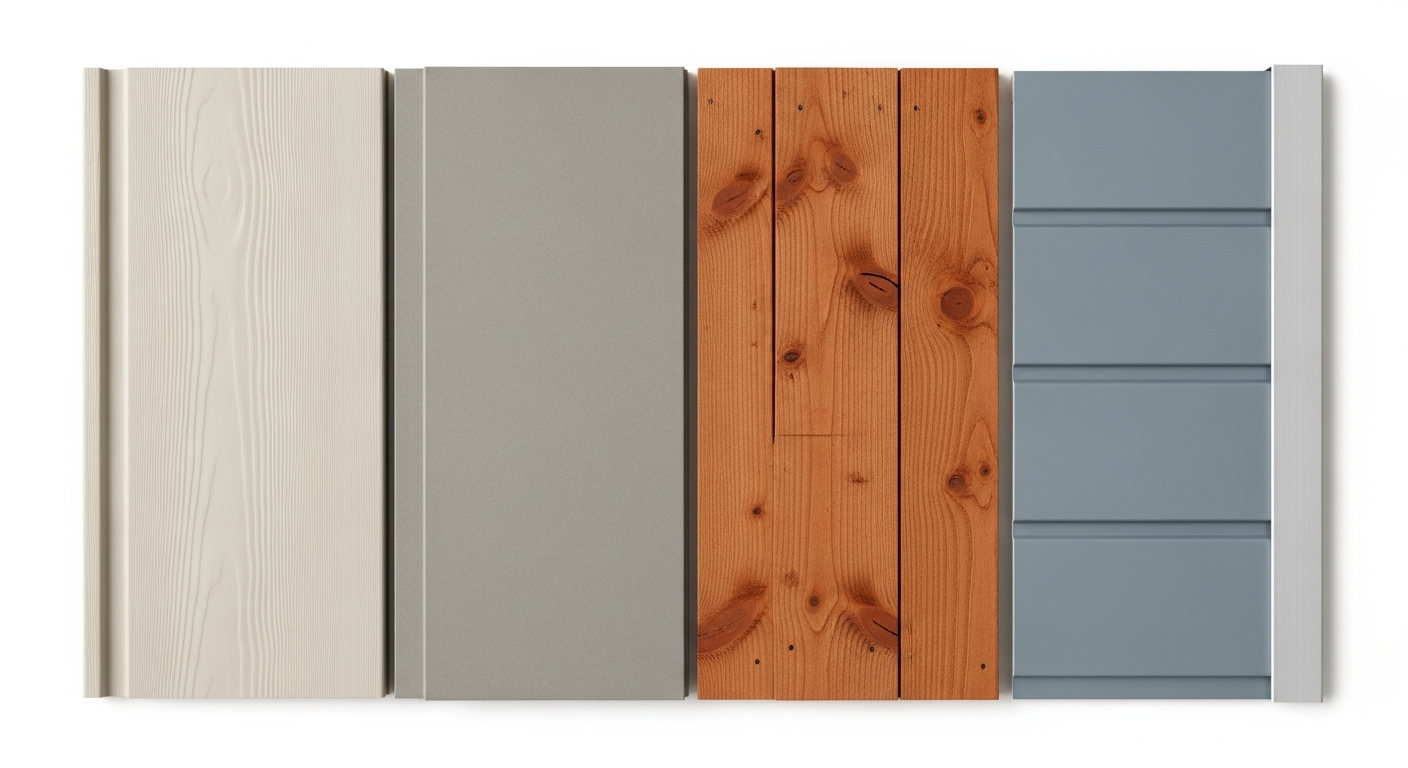
Understanding Ottawa's Climate Demands
Before comparing siding materials, it's essential to understand what Ottawa's climate actually demands of an exterior cladding system. The capital region's climate is one of the most punishing in southern Canada, and not every popular siding material is equally up to the task.
| Climate Factor |
Ottawa Reality |
Impact on Siding |
| Annual temperature range | -35C to +35C (70C swing) | Constant expansion/contraction stress |
| Freeze-thaw cycles | 50-80 per winter | Material fatigue, water expansion in cracks |
| Annual snowfall | ~210 cm | Ice damming, snow load against walls |
| Annual rainfall | ~730 mm | Water resistance critical |
| UV index (summer) | 8-9 (very high) | Color fading, chalking, polymer breakdown |
| Wind events | Frequent gusts 60-90 km/h | Panel pull-off, fastener stress |
| Hail events | 2-4 per year (regional avg) | Surface denting, cracking |
| Ice storms | 1-2 per decade major events | Branch impact, ice weight |
What Ottawa Siding Must Withstand
Beyond cosmetic appeal, the right Ottawa siding material must offer: cold-impact resistance (no winter brittleness), low water absorption, dimensional stability through temperature swings, UV-resistant pigmentation, fire resistance for code compliance, fastener system that survives wind events, and minimal maintenance requirements. Choosing a material that fails on even one of these criteria leads to expensive premature replacement.
Vinyl Siding: The Ottawa Standard
Vinyl Siding Most Popular
Best For: Budget-conscious homeowners, suburban detached homes, rental properties, builder-grade construction.
Cost Installed: $8-$13/sq ft in Ottawa
Lifespan in Ottawa: 20-30 years
Maintenance: Minimal — annual soft wash
Vinyl siding (PVC) is by far the most common siding in Ottawa, used on roughly 60-70% of detached homes built since 1990. It's affordable, low-maintenance, available in dozens of colors, and reasonably durable when installed correctly. Major Canadian brands installed by Ottawa contractors include Gentek, Kaycan, Mitten (Royal Building Products), and Georgia Pacific.
Pros
- Lowest upfront cost
- Wide color/style selection
- Low maintenance
- No painting required
- Resistant to insects and rot
- Quick installation
Cons
- Brittle in extreme cold
- Fades over 10-15 years
- Lower R-value
- Less resale value than premium options
- Can melt near grills/heat sources
- Wind damage susceptible if poorly fastened
Insulated Vinyl Siding: The Energy Upgrade
Insulated Vinyl Siding Energy Upgrade
Best For: Energy-conscious homeowners, older homes with poor wall insulation, sound dampening priorities.
Cost Installed: $11-$16/sq ft in Ottawa
Lifespan in Ottawa: 25-35 years
R-Value Added: R-2 to R-4
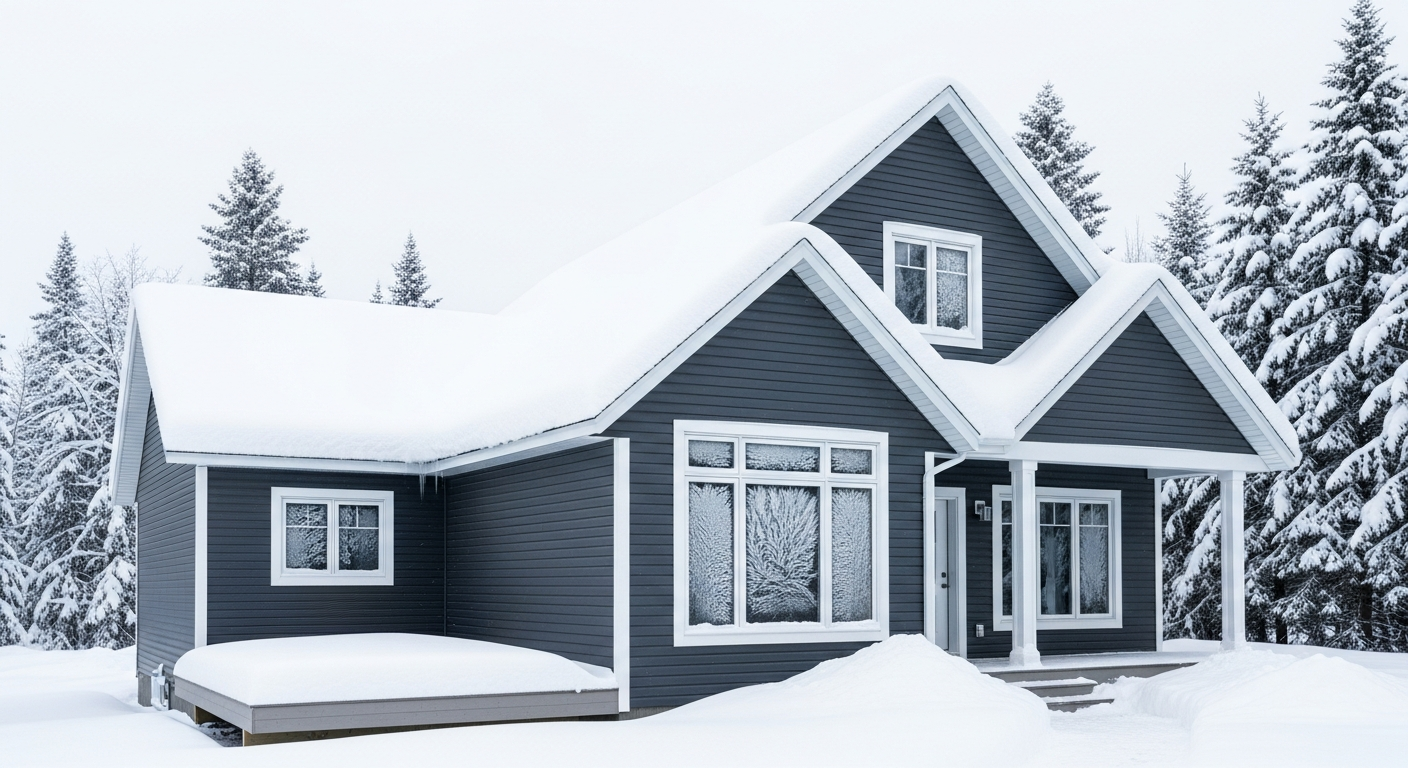
Insulated vinyl siding has a rigid foam (typically EPS) backing permanently bonded to each panel. This adds modest R-value, reduces thermal bridging through wall studs, dampens noise, and produces a thicker, more substantial appearance. For older Ottawa homes with R-12 or lower wall insulation, insulated vinyl can reduce heating costs by 5-15% — a meaningful upgrade in our climate.
Pros
- Improved energy efficiency
- Better noise reduction
- More impact-resistant than standard vinyl
- Smoother, premium appearance
- Reduces wall thermal bridging
Cons
- 30-40% higher cost than standard vinyl
- Modest R-value gain only
- Still vulnerable to fading
- Requires expert installation for moisture management
Aluminum Siding: The Legacy Choice
Aluminum Siding Heritage Option
Best For: Replacement matching for 1960s-80s homes, fire-prone areas, low-maintenance preference.
Cost Installed: $10-$15/sq ft in Ottawa
Lifespan in Ottawa: 25-40 years
Maintenance: Periodic painting after 20+ years
Aluminum siding was the dominant exterior material in Ottawa from the late 1960s through the 1980s. While it has largely been displaced by vinyl in new construction, it remains a viable choice — particularly for replacement work matching existing aluminum and for homeowners who prioritize fire resistance and recyclability. Aluminum doesn't crack in extreme cold the way vinyl does, but it dents from hail and impact more easily.
Pros
- Non-combustible (fire safe)
- Won't crack in extreme cold
- Lightweight
- Recyclable
- Insect-proof and rot-proof
- Long lifespan
Cons
- Dents easily from hail/impact
- Color fades and chalks over time
- Requires painting every 15-20 years
- Limited modern color/style options
- Conducts cold (no thermal break)
- Noise: can be noisy in rain/hail
Fiber Cement Siding: The Premium Performer
Fiber Cement Siding (James Hardie, Allura) Premium
Best For: Long-term homeowners, premium custom builds, modern architectural styles, heritage districts requiring authentic look.
Cost Installed: $14-$22/sq ft in Ottawa
Lifespan in Ottawa: 30-50+ years
Maintenance: Repaint every 12-15 years
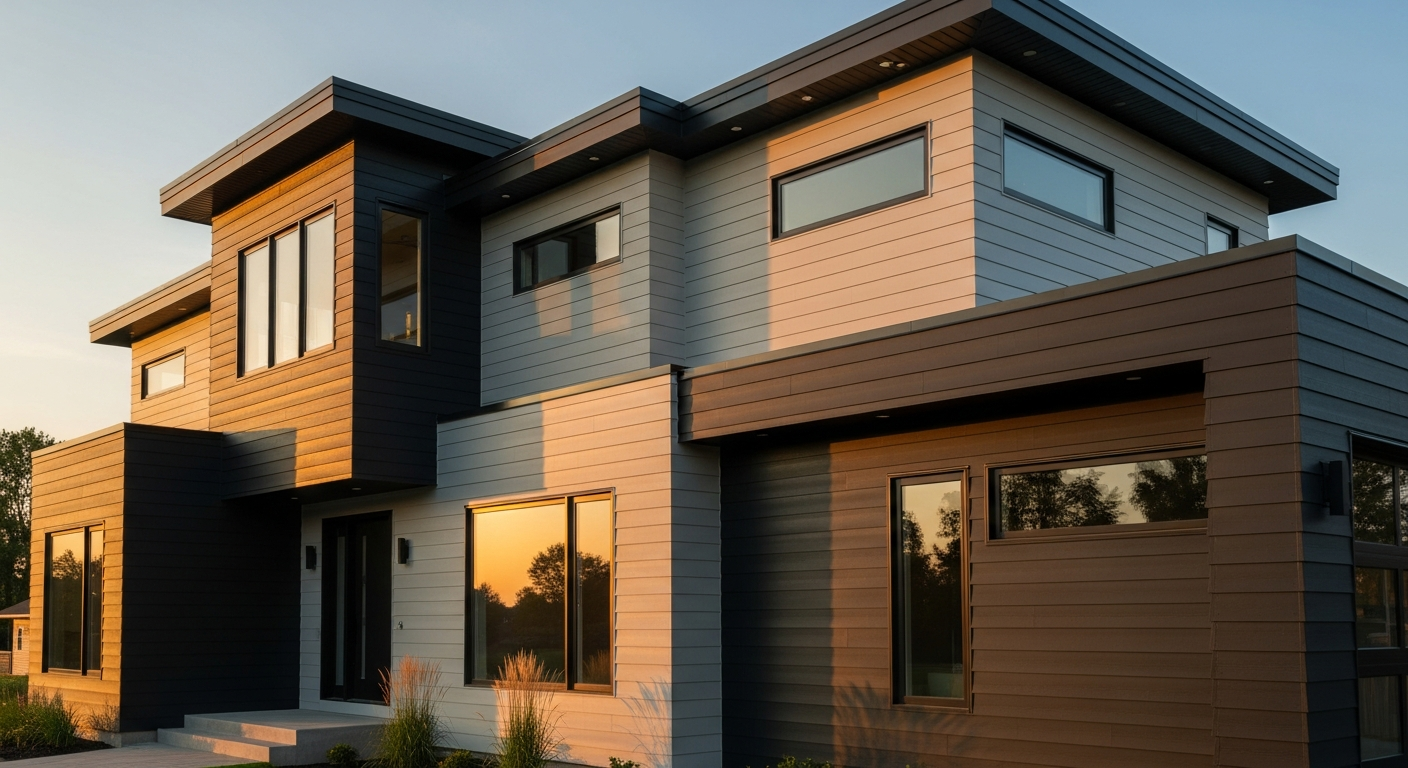
Fiber cement is the gold standard for premium Ottawa siding installations. Made from cement, sand, cellulose fibers, and water, it offers extraordinary durability, fire resistance, dimensional stability, and an authentic look that mimics wood, stucco, or smooth modern panels. James Hardie is the dominant brand, with HardiePlank, HardieShingle, and HardiePanel lines all certified for Canadian climates including the HZ5 (cold climate) formulation specifically engineered for places like Ottawa.
Pros
- 30-50+ year lifespan
- Class A fire rating
- Insect-proof, rot-proof
- Won't crack, warp, or melt
- Authentic wood look
- Highest resale value
- 30-year color warranty (Hardie ColorPlus)
Cons
- Higher upfront cost
- Heavy — requires skilled crew
- Silica dust during cutting (PPE required)
- Will eventually need repainting
- Specialty fasteners required
Engineered Wood Siding (LP SmartSide)
Engineered Wood (LP SmartSide) Wood Look, Better Performance
Best For: Homeowners wanting authentic wood appearance with improved durability, mid-range budgets.
Cost Installed: $11-$17/sq ft in Ottawa
Lifespan in Ottawa: 25-40 years
Warranty: 5-year labor + 50-year substrate (LP)
Engineered wood siding combines real wood fibers with resins and zinc-borate treatment for moisture and pest resistance. LP SmartSide is the dominant brand and has gained substantial market share in Ottawa over the past decade. It offers an authentic wood appearance at significantly less cost than cedar or fiber cement, with installation closer to vinyl in speed and ease.
Pros
- Authentic wood look and feel
- Lighter than fiber cement
- Easier installation than fiber cement
- Strong warranty backing
- Treated against insects/rot
- Holds paint well
Cons
- Requires repainting every 8-12 years
- More vulnerable to moisture than fiber cement
- Edge swelling possible if not sealed
- Less impact-resistant than fiber cement
Cedar and Real Wood Siding
Cedar / Real Wood Siding Heritage Authentic
Best For: Heritage homes in The Glebe, Westboro, Old Ottawa South; cottage and rural properties; homeowners committed to traditional aesthetics.
Cost Installed: $15-$25/sq ft in Ottawa
Lifespan in Ottawa: 20-40 years (with maintenance)
Maintenance: Stain or paint every 4-8 years
Real cedar siding remains the gold standard for character homes and heritage properties. Its natural beauty, dimensional stability, and traditional appeal cannot be replicated by any synthetic material. However, in Ottawa's climate, cedar requires consistent maintenance to perform well — neglected cedar fails quickly. Many heritage districts require cedar (or matching replacement) for character preservation.
Pros
- Unmatched natural beauty
- Heritage authenticity
- Naturally rot/insect resistant
- Renewable, biodegradable
- Can be refinished repeatedly
- Highest curb appeal for character homes
Cons
- Highest maintenance burden
- Most expensive long-term
- Vulnerable to moisture if neglected
- Requires staining/painting every 4-8 years
- Can warp, crack, and split
- Combustible (fire risk)
Side-by-Side Material Comparison
Choosing the right material requires comparing how each performs across the criteria that matter most for Ottawa homeowners. The table below summarizes the key data points for the five major siding categories used in the National Capital Region.
| Criterion |
Vinyl |
Insulated Vinyl |
Aluminum |
Fiber Cement |
Engineered Wood |
Cedar |
| Cost (installed/sq ft) | $8-$13 | $11-$16 | $10-$15 | $14-$22 | $11-$17 | $15-$25 |
| Lifespan (Ottawa) | 20-30 yr | 25-35 yr | 25-40 yr | 30-50+ yr | 25-40 yr | 20-40 yr |
| R-value (panel) | R-0.6 | R-2 to R-4 | R-0.6 | R-0.5 | R-1.0 | R-1.0 |
| Cold impact resistance | Fair | Good | Good | Excellent | Good | Excellent |
| Fire resistance | Poor | Poor | Excellent | Excellent (Class A) | Fair | Poor |
| Maintenance level | Very Low | Very Low | Low | Low | Medium | High |
| Color/fade resistance | Fair | Fair | Fair | Excellent | Good | Repaint required |
| Resale value impact | Standard | Standard+ | Lower | Premium | Standard+ | Premium (heritage) |
| DIY friendliness | Moderate | Moderate | Hard | Hard | Hard | Hard |
| Eco-friendliness | Low | Low | High (recyclable) | Medium | Medium-High | High (renewable) |
Cost Analysis: Materials & Installation in Ottawa
Beyond per-square-foot pricing, Ottawa homeowners need to think about total project cost, including teardown of existing siding, sheathing repair, house wrap, flashing, trim, and disposal. Working with experienced siding contractors ensures accurate, transparent pricing that includes all line items rather than surprise add-ons mid-project.
| Project Component |
Typical Ottawa Cost |
Notes |
| Tear-off existing siding (avg home) | $1,500-$3,500 | Includes disposal |
| House wrap (Tyvek/equivalent) | $0.50-$1.20/sq ft | Critical moisture barrier |
| Sheathing repair (per 4x8 sheet) | $300-$700 | Common on older homes |
| New flashing (windows/doors) | $30-$80 per opening | Mandatory in Ontario Building Code |
| Trim and J-channel | $3-$8/linear ft | Brand and style dependent |
| Soffit/fascia (if included) | $8-$15/linear ft | Often bundled with siding |
| Permit (if required) | $200-$600 | City of Ottawa |
| Avg total: 1,800 sq ft home | $25,000-$60,000 | Vinyl low end, fiber cement high end |
Total Cost of Ownership Over 30 Years
Looking only at upfront cost is a mistake. When you factor in repainting, repair, and replacement cycles over 30 years, the true cost rankings shift considerably:
1. Standard Vinyl: $25,000 (initial) + $0 (maintenance) = $25,000 — but may need replacement at year 25
2. Insulated Vinyl: $32,000 + ~$3,000 energy savings = $29,000 net
3. Fiber Cement: $42,000 + $5,000 (one repaint) = $47,000 — but lasts 50+ years
4. Engineered Wood: $34,000 + $8,000 (2-3 repaints) = $42,000
5. Cedar: $50,000 + $20,000 (5+ stains/paints) = $70,000 — but irreplaceable heritage value
Energy Efficiency & R-Value by Material
In a climate like Ottawa's, where heating costs can exceed $2,500 annually for an average detached home, the thermal performance of your siding system matters. While siding panels themselves contribute relatively little to whole-wall R-value, certain systems significantly reduce thermal bridging — the heat loss through wall studs that bypass cavity insulation.
| System |
Whole-Wall R-Value Impact |
Annual Heating Savings (avg home) |
| Standard vinyl over original wall (R-12) | R-12.6 effective | Baseline |
| Insulated vinyl over original wall | R-15 effective | $150-$300/year |
| Vinyl over rigid foam (R-5) added | R-17 effective | $250-$450/year |
| Fiber cement over rigid foam (R-7.5) | R-19 effective | $350-$600/year |
| Full continuous insulation rebuild (R-10+) | R-22+ effective | $500-$900/year |
Pro Tip: Adding 1-2 inches of rigid foam exterior insulation behind any siding type during installation is the single highest-ROI energy upgrade most Ottawa homeowners can make. Talk to your siding installation specialists about exterior insulation options before committing to a siding choice.
Our Recommendations by Home Type
The "best" siding material depends entirely on your home, neighbourhood, budget, and how long you plan to stay. Here are our research-backed recommendations for common Ottawa scenarios:
| Home Scenario |
Recommended Material |
Why |
| Suburban detached, 2000s build, planning to sell in 5 years | Standard vinyl | Best ROI, fast turnaround |
| Suburban detached, 2000s build, staying 15+ years | Insulated vinyl | Energy savings + comfort |
| Older home with poor wall insulation | Fiber cement + rigid foam | Maximum efficiency upgrade |
| Premium custom build or major renovation | Fiber cement (James Hardie) | Highest resale, lowest lifetime cost |
| Heritage home in Glebe/Westboro | Cedar or fiber cement (wood look) | Character preservation |
| Modern architectural style | Fiber cement panel/board-and-batten | Authentic look, durability |
| Mid-century home with original aluminum | Replacement vinyl or fiber cement | Aluminum match difficult |
| Rental property | Standard vinyl | Low maintenance, low cost |
| Forest-edge property (fire risk) | Fiber cement or aluminum | Class A fire rating |
| Rural Carleton Place / outer area | LP SmartSide or fiber cement | Wind/weather durability |
Choose the Right Siding Partner for Your Ottawa Home
Selecting the right siding material is only half the equation — installation quality determines whether your investment lasts 15 years or 50. For homeowners across the National Capital Region, working with professional siding installation teams who specialize in Ottawa's climate ensures you get the full performance and lifespan your material deserves.
Visit kalooziecomfort.com to learn more about siding services and request a consultation for your home.
Frequently Asked Questions About Ottawa Siding Materials
What is the best siding material for cold climates like Ottawa?
Fiber cement (specifically James Hardie HZ5 formulation) is widely considered the best siding for cold climates because it doesn't crack in extreme cold, won't warp from freeze-thaw cycles, offers Class A fire resistance, and lasts 30-50+ years. Insulated vinyl is the best mid-budget option, offering durability and improved energy efficiency.
Is vinyl or aluminum siding better for Ottawa?
For most Ottawa homeowners today, vinyl is the better choice. Modern vinyl offers better color retention, lower maintenance, more design options, and similar lifespan to aluminum at a lower cost. Aluminum still wins on fire resistance and dent-free aesthetics for older replacement work, but new installations rarely choose aluminum over vinyl or fiber cement.
How much does new siding cost in Ottawa?
For an average 1,800 sq ft Ottawa detached home, expect $25,000-$35,000 for vinyl, $30,000-$40,000 for insulated vinyl, $35,000-$45,000 for engineered wood, $40,000-$55,000 for fiber cement, and $45,000-$65,000+ for cedar. Costs include teardown, house wrap, flashing, trim, and installation by professional siding crews.
Does new siding increase home value in Ottawa?
Yes. Remodeling Magazine's Cost vs Value report consistently shows new siding returning 70-80% of project cost at resale, with fiber cement leading at ~76% ROI and vinyl at ~72% ROI. Beyond ROI, fresh siding dramatically improves curb appeal, reducing time-on-market for sellers.
How long does siding installation take?
For an average Ottawa detached home: vinyl takes 5-8 days, aluminum 5-8 days, engineered wood 7-10 days, fiber cement 10-14 days, and cedar 10-14 days. Weather, complexity, and crew size affect timing. Most reputable Ottawa siding contractors book 4-12 weeks out in peak season.
Is insulated vinyl siding worth the extra cost in Ottawa?
For most older Ottawa homes (built before 1990) with lower wall insulation, yes. Insulated vinyl typically pays back the upgrade cost within 8-12 years through heating savings of $150-$300 annually, plus improved comfort and noise reduction. For new builds with already-good wall insulation, the ROI is more modest.
What siding lasts the longest in Ottawa?
Fiber cement leads with a 30-50+ year lifespan, followed by aluminum at 25-40 years, engineered wood and insulated vinyl at 25-35 years, standard vinyl at 20-30 years, and cedar at 20-40 years (heavily dependent on maintenance).
Can siding be installed in winter in Ottawa?
It's strongly discouraged. Vinyl becomes brittle and prone to cracking below -10C, caulks won't cure properly, and crews are slowed significantly. Most reputable Ottawa contractors limit winter work to true emergencies. Plan major siding projects for May through October.
What's the most eco-friendly siding option?
Aluminum (highly recyclable) and FSC-certified cedar (renewable) are the two greenest options. Fiber cement has moderate environmental impact due to cement production. Vinyl has the largest environmental footprint due to PVC manufacturing. For a balance of eco-credentials and practicality in Ottawa, engineered wood and aluminum are strong choices.
Do I need a permit to replace my siding in Ottawa?
Generally, like-for-like siding replacement does not require a permit in Ottawa. However, structural changes, additions, or significant material upgrades that affect insulation values may require permits. Always confirm with the City of Ottawa Building Code Services or your contractor before starting.
Useful external resources: CMHC home maintenance guides, Natural Resources Canada home energy efficiency, James Hardie Canada, Gentek Building Products.
Explore more Ottawa exterior insights: Browse our complete home builder directory, discover top builders in Barrhaven, Kanata, and Orleans, or read our companion guides on siding repair in Ottawa, choosing the best siding company, kitchen renovations, and Ottawa plumbing services.